

Should You Create Template Parts And Lib Directory With Wordpress Tghemes
Mar 24, 2022
Domantas 1000. & Prasasti P.
11min Read
How to Create a WordPress Child Theme and Customize It
One of the biggest strengths of WordPress is its customizability, which is as well true with WordPress themes. With them, users have a high degree of flexibility in creating and modifying their site'due south appearance.
Download WordPress Cheat Sheet
However, creating a complete theme from the ground up tin can exist a difficult and time-consuming chore. That is why about people adopt to create child themes for their WordPress websites.
This tutorial will explain why this do is necessary and guide you through creating and editing your first child theme.
Why Yous Should Apply WordPress Kid Themes
Using a kid theme is one of the nigh efficient ways to create a new WordPress theme based on an existing one while as well maintaining near of its characteristics. As it uses the features and elements from its parent theme, there is no need to code everything from scratch.
Since a child theme inherits the characteristics of a master or a parent theme, it is possible to customize its lawmaking without breaking the original'southward functionality. This way, if a theme receives an update, all of the changes you made won't be overwritten.
Building a child theme is also relatively like shooting fish in a barrel since you don't have to dig as well deep in your site'south root files. Tasks such equally transferring files and customizing CSS files can be done using your control panel's file managing director and the WordPress dashboard.
Child themes too permit you lot to maintain certain visual aspects from the parent theme and keep them uniform across multiple domains.
Essential aspects, including constant security updates and patches, will also exist taken care of, especially if you lot choose a parent theme from a reputable developer.
Another reason to utilize a kid theme is that it offers a fail-safe solution if y'all ever misconfigure it. Plus, it allows you to efficiently track the parts you have changed since the files of a kid theme are split up from its parent.
How WordPress Kid Themes Piece of work
A child theme is stored in a split directory from its parent theme with its own fashion.css and functions.php files. These two core theme files are required to make your WordPress theme work, but the folder may contain other files likewise.
Using the relevant .css and .php files, you can modify everything from layout styling parameters to the code and scripts used past a child theme, fifty-fifty if the attributes aren't nowadays in its parent theme.
When a visitor accesses your website, WordPress will get-go load the child theme and then fill up the missing styles and functions using parts from an existing theme.
Equally a result, you'll become the best out of your customized design without sacrificing the parent theme's cadre functionality.
How to Create a Child Theme in WordPress
Before you lot start creating a child theme, go along in mind that a basic understanding of HTML, CSS, and PHP is essential since the process involves some coding. With numerous parent themes available, it is as well important to choose one that suits your needs.
At that place are two common methods of creating a WordPress theme. Users can either utilise a plugin or build a kid theme using custom code. Each option has its ain strengths and weaknesses. In this tutorial, nosotros will focus on creating a bones kid theme manually.
The following instructions utilize Twenty Seventeen as the parent theme, although it is possible to use another one if you adopt. We're likewise going to use Hostinger's File Manager to add and edit files, but FTP works as well.
Permit's take a expect at the step-by-step guide on how to create a child theme in WordPress:
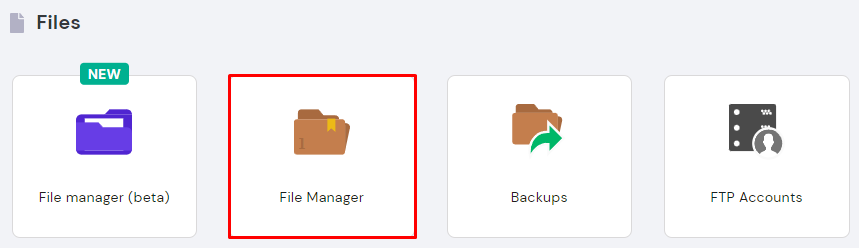
- Admission hPanel and open File Manager.
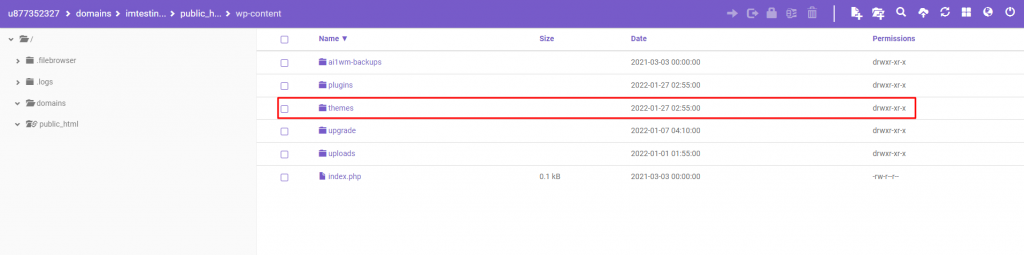
- Navigate to public_html -> wp-content -> themes folder. This is where your parent theme and child theme's directory will be located.
- Create a child theme'south directory past clicking the New Folder icon on the upper menu. Enter a name for your kid theme and click Create.

Important: Supplant the spaces in the folder or file proper name with hyphens (-) to prevent errors.
- Create a manner.css file in the child theme binder. Populate its content with the post-obit code:
/* Theme Name: Twenty Seventeen Kid Theme URI: http://yourdomain.com Description: Twenty Seventeen Kid Theme Author: Your Name Author URI: http://yourdomain.com Template: twentyseventeen Version: 1.0.0 Text Domain: twentyseventeen-child License: GNU General Public License or later License URI: http://www.gnu.org/licenses/gpl-2.0.html Tags: light, dark, two-columns, right-sidebar, responsive-layout, accessibility-ready */
This code contains basic information virtually the kid theme, such as its proper name and what theme is used equally its parent. Additional details like author and description are mainly used as identifiers if yous decide to publish the theme.
- Change all the values appropriately. The nearly important field is Template because it tells WordPress which parent theme your child theme is based on. One time done, click Salvage and Close.
- In this step, yous will enqueue the parent and kid theme stylesheets. Create a PHP file named functions.php in the kid theme's directory, but practise non fill information technology with the lawmaking from the parent theme'southward file considering information technology has to remain separate.
Skip this stride if you're using WordPress 5.ix as the kid theme volition inherit the global styles from the parent theme's theme.json file.
Begin the code with an opening PHP tag, then include the functions that volition enqueue the parent theme stylesheet. Have a look at the instance beneath:
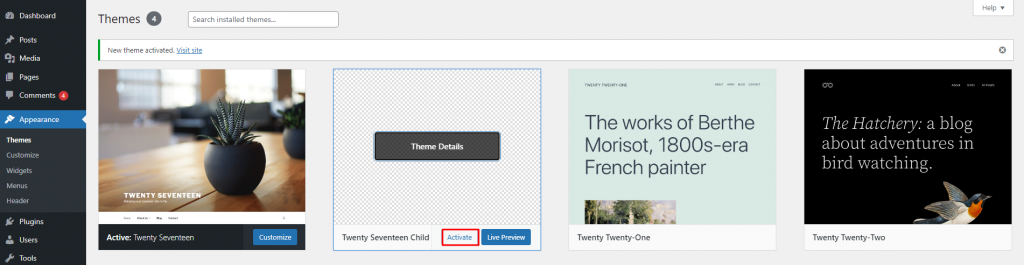
<?php add_action( 'wp_enqueue_scripts', 'enqueue_parent_styles' ); function enqueue_parent_styles() { wp_enqueue_style( 'parent-fashion', get_template_directory_uri().'/style.css' ); } ?> - Visit your website and access Advent -> Theme. Activate the child theme you've only made, and you will notice it looks the same as the parent theme.
How to Customize Your Kid Theme
To personalize your child theme, you need a basic understanding of CSS rules and how to audit elements then that you tin can pinpoint their CSS lawmaking and the grade they're assigned to.
There are a few methods to customize your child theme. Users can change the page layout by adding template files to the child theme folder. It is also possible to modify the kid theme'due south style past calculation custom CSS lawmaking.
Finally, child themes can too have new functionality that overrides their parent theme.
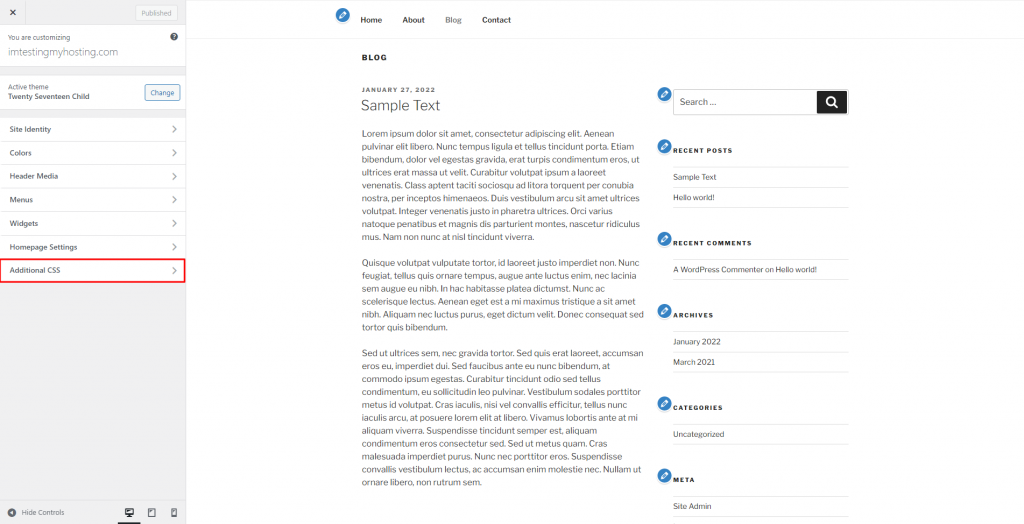
Now, allow'southward take a look at the basics of customizing a child theme. To do this, navigate to Appearance -> Themes and click Customize on your active child theme. When the Theme Editor opens, select Additional CSS.
Changing the Background Color
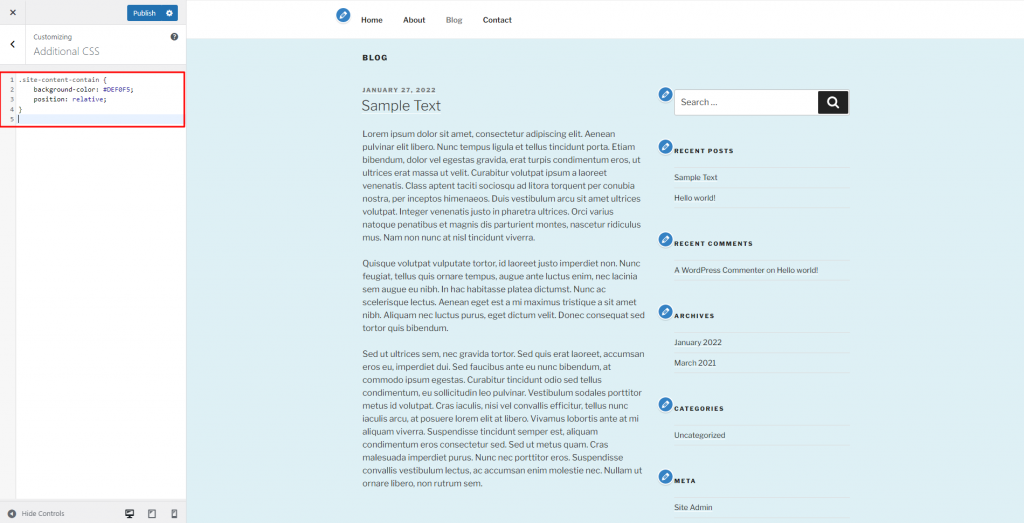
Insert the following CSS rule if you wish to change the background color of your child theme:
.site-content-incorporate { background-colour: #DEF0F5; position: relative; } The value next to background-color: corresponds to the hex code of the color you want. In this example, we are changing it from white to light blueish, so the consequence looks like this:
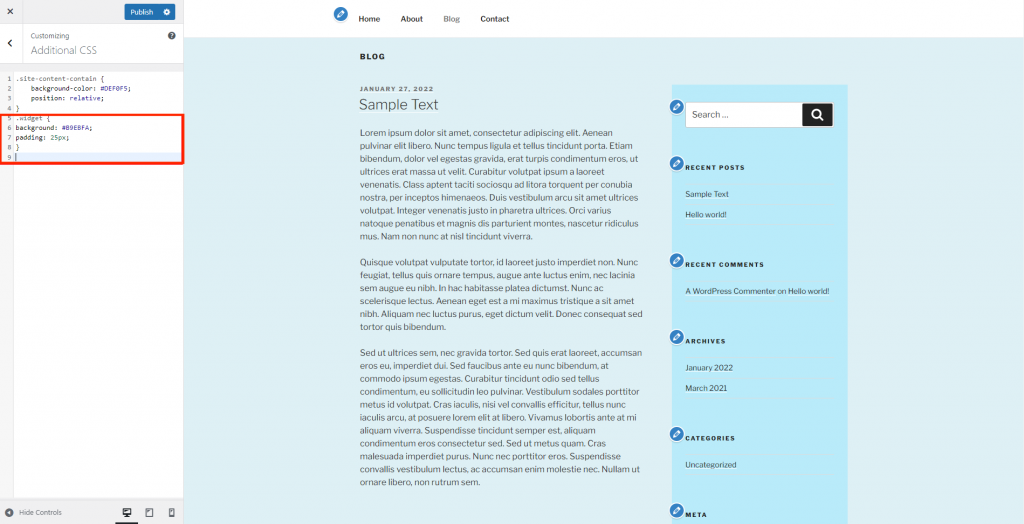
You can create a pleasing brandish of your widgets by adding some color to the sidebar with the post-obit CSS code:
.widget { background: #B9EBFA; padding: 25px; } Over again, don't forget to edit the color code accordingly. You should get a event like this:
Changing Font Types, Sizes, and Colors
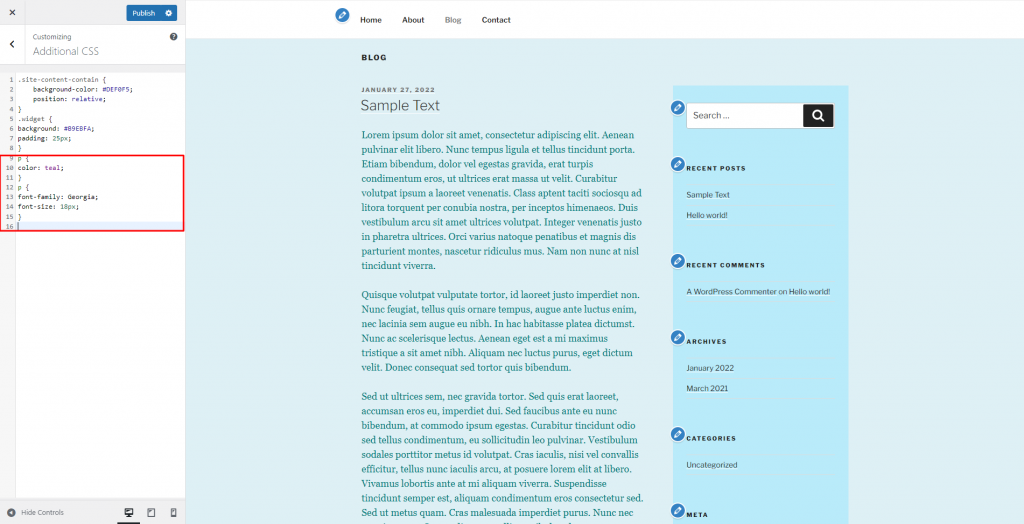
To modify the font blazon, size, and color of your child theme, insert the code below:
p { color: teal; } p { font-family unit: Georgia; font-size: 18px; } The p tag stands for paragraph. As you can see beneath, the above rule has changed the look of the paragraph's fonts based on the values specified.
To change the font of other text parts, like titles or headers, inspect the elements to meet their CSS parameters get-go. Let's endeavour changing the title'south font color:
- Offset, correct-click on the text and select Inspect. In this tutorial, we are looking for this code in the Styles tab:
.entry-title a { color: #333; text-ornament: none; margin-left: -2px; } This code represents the title for this sample web log mail service, including its color, decoration, and margin.
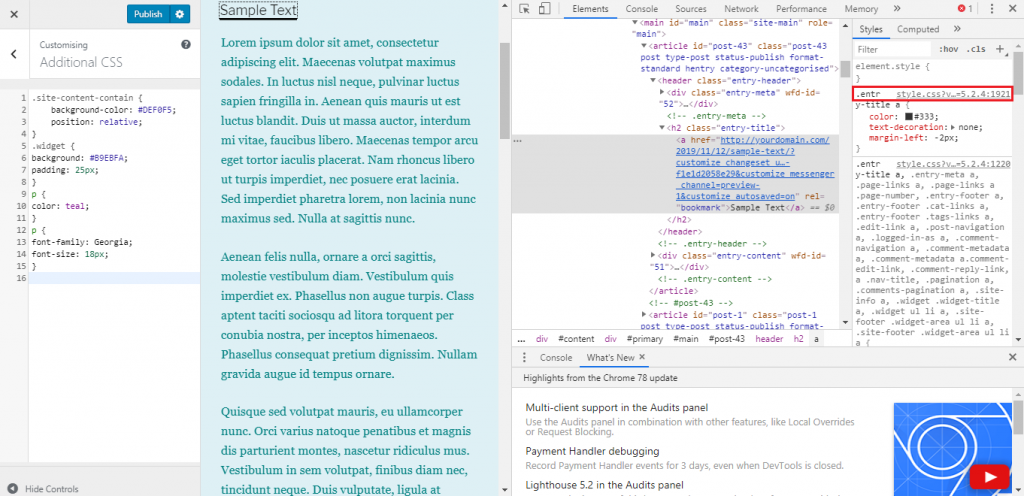
- Copy and paste the lawmaking to the Boosted CSS tab and change the values accordingly. In this case, we changed the font color from black to red by modifying the hex value.
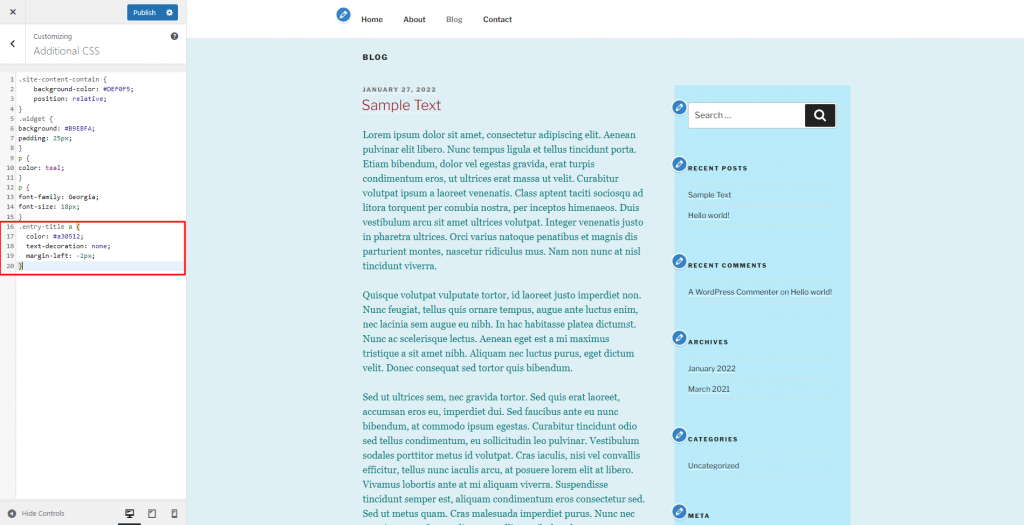
This process is also applicable to whatever other elements you wish to modify.
Changing the Layout of Posts and Pages
But similar how the custom CSS of a WordPress child theme overrides the manner of its parent theme, template files allow you to create your own layouts.
Each WordPress theme has a different folio layout and structure, but most of them consist of sections like header, content, footer, and sidebar.
These sections are controlled by template files that correspond to their part. For example, the header department is typically handled past the header.php file.
The original template files are located in the parent theme folder. If y'all want to make a custom page template, all you need to do is re-create the template file into your kid theme's folder and change it.
Keep in mind that your new template file must have the same name and be in the folder that corresponds to the original.
Twenty Seventeen splits its template files into template-parts that are referenced in the chief template using the WordPress role get_template_part().
For example, if y'all wish to edit page.php, you tin kickoff by locating the template parts to see if those are the $.25 you lot need to edit. In our instance file, line 28 reads:
get_template_part( 'template-parts/page/content', 'page' );
How do we read this? template-parts/page/ is the folder path. Meanwhile, content refers to the character in the file name before the hyphen, with folio afterward the hyphen.
Together they grade the full path of:
wp-content/themes/twentyseventeen/template-parts/folio/content-folio.php
Following the structure, if y'all want to change the layout of content-folio.php, you need to copy information technology to your child theme folder and identify information technology in this location:
wp-content/themes/twentyseventeen-child/template-parts/folio/content-page.php
Changing Global Styles in WordPress 5.9
Customizing a block-based child theme in WordPress 5.9 is piece of cake. The global styles panel lets yous change the theme's color palette and background color without coding.
If you do desire to lawmaking default styles, create a theme.json file for the kid theme containing simply a custom CSS block with style and setting definitions.
Using the Global Styles Panel
Go to the site editor by navigating to Appearance -> Site Editor. Then, click on the black-and-white icon at the top-right corner of the screen to open the global styles console.
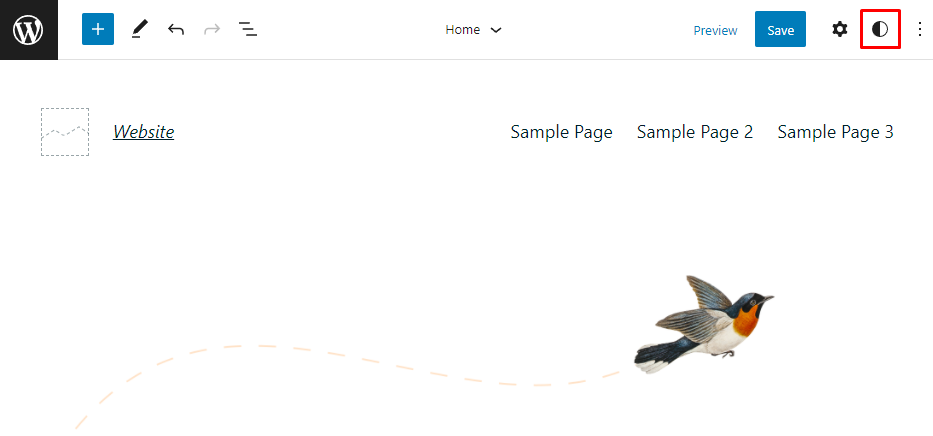
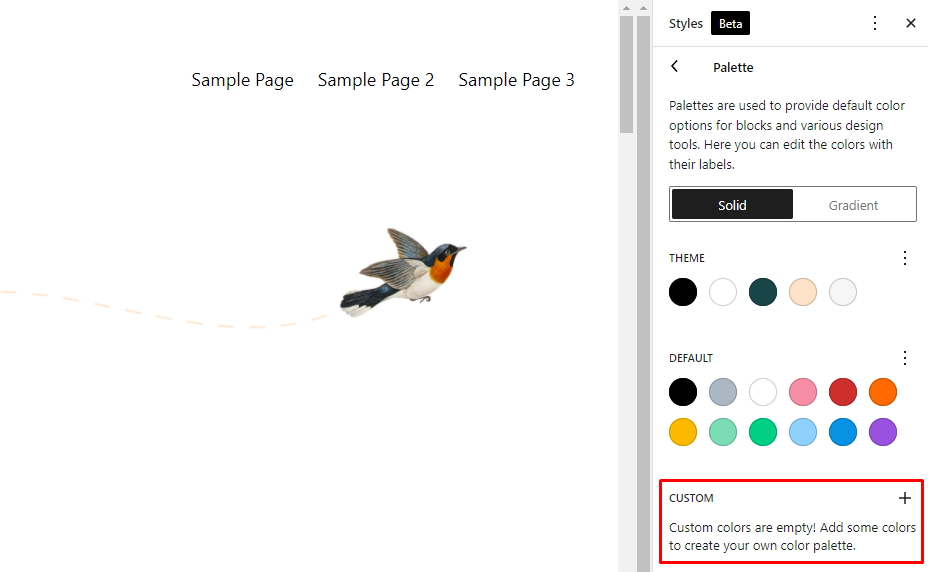
The global styles panel will appear on the right side of the screen. Become to Colors to find the customization options for the background, text, and links global color.
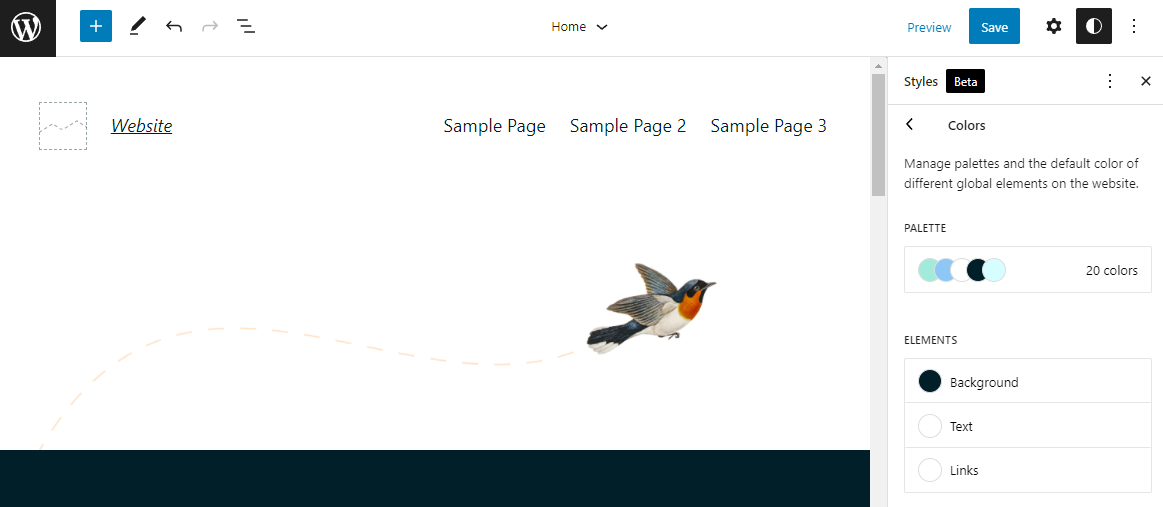
To add custom colors, go to the Palette setting and discover the Custom section at the bottom of the panel. Click on the Plus (+) icon, and the color picker tool volition announced. Yous can add as many colors as you want without affecting the parent theme'due south global styles settings.
Creating a theme.json File
Creating a new theme.json file will override the theme's default color palette instead of calculation a custom color.
Nosotros only demand a small block of CSS lawmaking to do that – it won't affect the parent theme.
Apply your control panel's file manager to open up the child theme folder directory and add together theme.json. After that, simply add together the custom CSS code to the file.
For instance, here is a code snippet to replace the theme's default color palette:
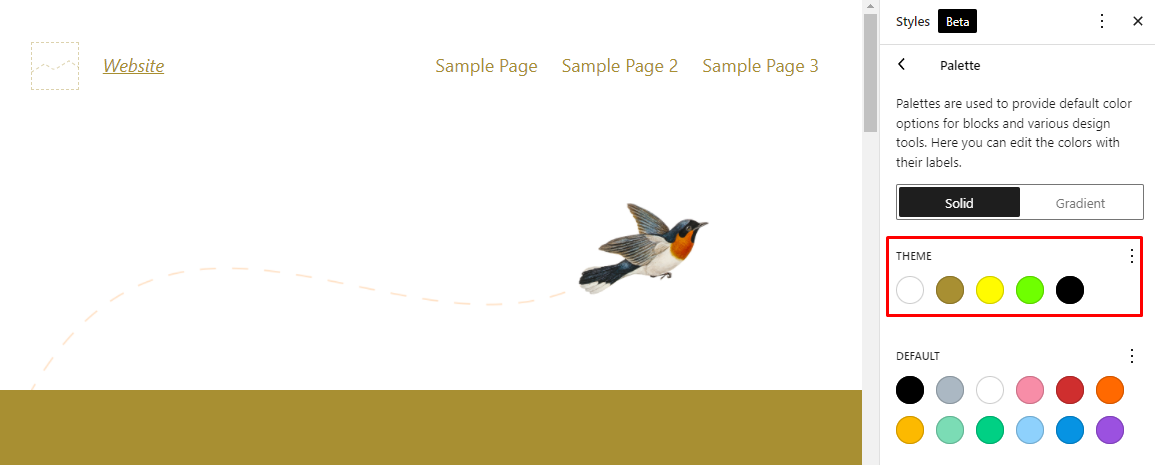
{ "version": 2, "settings": { "color": { "palette": [ { "slug": "foreground", "color": "#ffffff", "name": "Foreground" }, { "slug": "background", "color": "#a88f32", "proper noun": "Background" }, { "slug": "principal", "color": "#fffb00", "name": "Primary" }, { "slug": "secondary", "colour": "#6fff00", "name": "Secondary" }, { "slug": "third", "color": "#000000", "proper name": "Tertiary" } ] } } } Opening the global styles panel, you'll come across that the theme's default color palette has changed according to the CSS code.
Use this method to change other default styles, such as the duotone filter and block styles.
Adding and Removing Functions
Another significant reward of creating a child theme is the ability to have a separate functions.php file, which, just like when creating plugins, is used to add (or remove) certain features using PHP lawmaking.
The process volition exist straightforward if you want to create a new function that doesn't collaborate or relate in whatsoever way with the ones already existing in the parent theme. All you need to practice is add together the code to your function.php file.
However, the procedure can exist slightly more than complicated if you desire to override or alter a function that the parent theme already has. You'll need to override the parent theme'due south functions manually. There are three master ways to practice this:
- Override a pluggable function by adding a new function with the same proper noun to your child theme'south role.php file.
- Augment an existing function by writing another function with a different proper name in the kid theme'southward function.php file and make sure it runs later the one in the parent theme.
- Unhook a role from the parent theme to forestall WordPress from running information technology.
For example, the following code will disable the correct-click feature in your theme:
function your_function() { ?> <script> jQuery(document).ready(function(){ jQuery(certificate).bind("contextmenu",function(eastward){ return false; }); }); </script> <?php } add_action('wp_footer', 'your_function'); Potential Issues of Using a Child Theme
Even though using a child theme can exist benign, it may also come with some negative effects. Permit's take a look at iii potential issues you might encounter when using a kid theme on your WordPress website.
Slower Folio Load Fourth dimension
When a site uses a child theme, there is a possibility that it will load slower. This is because, during the loading procedure, WordPress will access the kid theme's stylesheet commencement and become to the parent theme'south stylesheet when it needs code that is not available.
This process of accessing two dissimilar stylesheets tin can take a negative affect on the site'southward functioning. However, the changes in folio load fourth dimension should exist relatively modest and go unnoticed by near users and search engine crawlers.
Information technology is also possible to further minimize this load time by keeping the child theme code clean. All and all, remember to keep track of your site's loading fourth dimension if yous decide to apply a child theme and take the necessary measures when you notice a significant drop in speed.
Steep Learning Curve
The procedure of learning how the parent theme works is peradventure one of the hardest parts of creating a child theme. That said, information technology'south a worthwhile investment.
Properly understanding the template hierarchy can be fourth dimension-consuming, especially when the parent theme has a circuitous structure with unique hooks and filters.
Some parent themes also come with numerous features and options. While this tin exist a huge advantage for your child theme, dealing with likewise many features can be confusing and prolong your learning process.
In well-nigh cases, information technology'll become easier in one case yous fully understand the parent theme'southward files and how they part.
Dependence on the Parent Theme
In that location is a possibility that the programmer of a parent theme may end working on an important characteristic or the theme entirely. They may also decide to brand a significant change to the theme which tin can impact your kid theme in some fashion.
If a developer drops a parent theme, your child theme volition finish receiving updates and patches, exposing it to various security threats. This tin exist highly impactful to any site that uses your child theme – they may demand to stop using it altogether depending on the severity of the situation.
18-carat and pop themes are less likely to be abandoned, even so, so you might not have to worry nigh this result.
How to Troubleshoot WordPress Child Theme Errors?
It's possible you'll come across issues when creating and implementing a child theme on a WordPress site. Allow'southward take a look at five common solutions to cheque if your kid theme doesn't piece of work properly.
- Check the part.php file. If you don't enqueue the child theme's stylesheet in the office.php file, the site volition load the parent theme instead. Therefore, brand certain to double-check the office.php file after yous make changes to a theme.
- Reference the parent theme. If y'all encounter the cleaved theme error, it might be because WordPress is treating your child theme equally a standalone theme. Gear up this error past referencing the parent theme's role in your child theme's CSS file.
- Utilize the !Of import CSS rule. You might encounter a case where some elements of your kid theme don't function properly considering the parent theme's CSS code overwrites them. The most common workaround for this effect is to add together CSS rules like !important to the child theme's CSS sheet.
- Name theme files properly. Some errors can be caused by wrong file names. WordPress requires a specific proper name for some files like stylesheets. If you lot proper noun it differently than style.css, the system won't exist able to locate and render it for the finish user.
- Articulate your enshroud. Caching might cause your web browser to brandish the parent theme or an older version of your child theme. The easiest workaround for this problem is to clear your WordPress cache and disable caching plugins if y'all utilise any.
Additional Tips and Tricks for Creating a Child Theme
The process of creating a new child theme can exist complicated, especially for beginners. Hither are 7 additional tips that might help you create a child theme more than easily:
- When you lot activate a child theme for the beginning time, consider doing it in a staging environment instead of a live website.
- Child themes need to have the same folder tree structure as their parent theme. WordPress will prioritize the file that comes outset in the template hierarchy, either from the kid or the parent theme.
- Brand sure your new function has the same name as the parent theme's function you desire to override.
- The all-time approach when creating a child theme directory is to give it the same name every bit the parent theme with the addition of -kid at the end.
- Choosing a parent theme framework from a reputable developer who regularly updates information technology is of import to avoid inconvenience and significant problems with your child theme.
- Consider looking through the many child themes already created for the parent theme if possible. This can requite you a general idea of the all-time approach for diverse tasks.
- Always recall to activate your new child theme once y'all upload it to WordPress.
- Continue in heed that a child theme is highly dependent on the parent theme, so make sure to keep every parent theme file in your WordPress theme installation.
- Don't be agape to first over if you lot meet an error.
Determination
A WordPress child theme lets WordPress users create an entirely new project based on the existing parent theme without breaking its core functionality.
With a bit of simple coding and directory direction, information technology is possible to modify the child theme every bit much equally you want.
In this article, we have learned about the benefits of using a child theme on your WordPress site and how it works. We take also looked at the step-by-pace guide to create a child theme and how to customize it.
Before proceeding with a kid theme, however, users demand to be enlightened of these potential issues when using one on their WordPress site:
- Slower page load time.
- Steep learning bend.
- Dependence on the parent theme.
For more WordPress evolution tutorials, check out our WordPress tutorials section. Don't hesitate to leave a comment below if you have any questions.

Domantas leads the content and SEO teams frontward with fresh ideas and out of the box approaches. Armed with all-encompassing SEO and marketing knowledge, he aims to spread the discussion of Hostinger to every corner of the world. During his complimentary time, Domantas likes to hone his web development skills and travel to exotic places.

Pras is a Digital Content Writer at Hostinger. With his IT didactics and experience every bit a website administrator, he hopes to share his knowledge with other tech enthusiasts. In his gratuitous time, Pras likes to play video games.

Should You Create Template Parts And Lib Directory With Wordpress Tghemes,
Source: https://www.hostinger.com/tutorials/how-to-create-wordpress-child-theme
Posted by: humphreysedgerhy.blogspot.com
0 Response to "Should You Create Template Parts And Lib Directory With Wordpress Tghemes"
Post a Comment